War has shaped some of the most powerful passages ever written. When Homer described the fall of Troy or Tolstoy stretched across the battlefield of Borodino, they weren't just telling stories they were capturing the weight of human conflict in ways that still hit hard centuries later. Studying famous war descriptions in literature analysis helps readers, students, and writers understand how language can carry the noise, fear, grief, and chaos of war onto the page. Whether you're preparing for a literature exam, writing a critical essay, or trying to improve your own fiction, knowing how great authors rendered war scenes gives you a real advantage.
What does analyzing war descriptions in literature actually involve?
Analyzing war descriptions in literature means breaking down how an author uses language, structure, imagery, and point of view to portray conflict. It goes beyond summarizing what happens in a battle scene. You're looking at how the author makes you feel the explosion, hear the screams, or sit inside a soldier's fear. This involves examining literary devices like metaphor, foreshadowing, sensory detail, irony, and narrative distance.
For example, when Erich Maria Remarque describes a gas attack in All Quiet on the Western Front, the analysis wouldn't just note that soldiers put on gas masks. It would explore how his short, panicked sentences mirror the urgency of the moment, how the cramped diction traps the reader alongside the characters, and how the physical detail of the mask straps biting into skin creates an almost bodily discomfort in the reader. That level of close reading is what separates surface-level commentary from real literary analysis.
Why do readers and students study war passages from classic literature?
There are several reasons people seek out this kind of analysis:
- Academic coursework. War literature is a staple in high school and university English classes. Books like The Iliad, War and Peace, Slaughterhouse-Five, and The Things They Carried are regularly assigned, and students need to write analytical essays about them.
- Writing craft study. Aspiring fiction writers study how masters like Tim O'Brien, Sebastian Faulks, and Stephen Crane handle pacing, tension, and emotional weight during combat scenes. If you're working on historical fiction, learning from these examples can sharpen your approach to writing vivid war scenes for historical fiction.
- Historical understanding. Literature gives access to the emotional and psychological reality of war in a way that textbooks rarely do. Reading Wilfred Owen's poetry or Pat Barker's Regeneration trilogy offers insight into shell shock, disillusionment, and the human cost of conflict that dates and statistics cannot.
- Critical thinking development. Analyzing how different authors handle the same subject war teaches you to compare techniques, evaluate effectiveness, and form supported arguments. These are transferable skills for any kind of literary or rhetorical analysis.
Which war descriptions in literature are most commonly analyzed?
Certain passages appear again and again in literary criticism and classroom discussions. Here are some of the most studied and what makes them worth examining:
Homer's Iliad The Death of Hector
Homer doesn't flinch from violence. The extended similes comparing battle to natural disasters, the detailed descriptions of spears piercing armor, and the sudden shifts to divine perspective all create a layered portrait of war. Scholars analyze how Homer balances glorification with grief Achilles is mighty, but the scene ends with Priam weeping for his son. This tension between heroism and horror runs through nearly all war literature that followed.
Leo Tolstoy's War and Peace The Battle of Borodino
Tolstoy takes a deliberately disorienting approach. Pierre, a civilian, wanders through the battlefield confused, barely understanding what's happening around him. The analysis here often focuses on Tolstoy's argument that war is too massive and chaotic for any single person to comprehend, let alone control. The fragmentation of perspective is the point. For readers interested in how authors use evocative war narrative techniques, Tolstoy's method of rendering confusion as a literary strategy is essential reading.
Stephen Crane's The Red Badge of Courage The First Combat Experience
Crane wrote about the American Civil War without having experienced it, yet his descriptions feel startlingly real. The analysis typically examines his use of color imagery, his refusal to name characters (they're called "the youth," "the loud soldier"), and how the lack of proper nouns strips individuality reflecting how war reduces people to roles. The famous scene where Henry Fleming flees in panic is studied for its psychological honesty and its subversion of traditional war heroism.
Erich Maria Remarque's All Quiet on the Western Front Trench Warfare
Remarque's descriptions of life in the trenches are among the most visceral in all of war literature. The scene where Paul Bäumer is trapped in a shell crater with a French soldier he has stabbed is analyzed for its raw emotional collapse Paul apologizes to the dying man, promises to write to his family, and watches him die over hours. Critics study how Remarque collapses the distance between enemy combatants to make an anti-war argument without ever stating it directly.
Tim O'Brien's The Things They Carried The Man I Killed
O'Brien's technique of imagining the life of a dead Vietnamese soldier, layering invented biographical details onto a corpse, is one of the most analyzed passages in contemporary war literature. The question scholars debate is whether the narrator is empathizing, confessing, or mythologizing and whether that ambiguity is the whole point. O'Brien blurs the line between fiction and memoir deliberately, raising questions about truth in war storytelling that connect to Hemingway's own approach to war writing.
Wilfred Owen's "Dulce et Decorum Est" Gas Attack
Owen's poem is probably the most frequently analyzed single war text in English literature education. The drowning simile "As under a green sea, I saw him drowning" and the final bitter address to the reader ("My friend, you would not tell with such high zest...") are studied for how Owen weaponizes literary form against patriotic propaganda. The Latin phrase he quotes and then dismantles is a masterclass in using irony as argument.
How do you actually analyze a war passage in literature?
If you're writing an essay or doing close reading, follow this approach:
- Read the passage multiple times. First for content, second for language, third for structure. Don't try to do everything at once.
- Identify the dominant literary devices. Is the author relying on simile? Fragmented syntax? Graphic sensory detail? Understatement? Each choice communicates something about how the author wants war to feel.
- Examine point of view and narrative distance. Is the narrator inside the action or observing from outside? Is the language intimate or detached? This dramatically changes the reader's experience. First-person combat narration hits differently than a panoramic third-person view.
- Look at what's absent. Sometimes the most telling choice is what the author doesn't describe. Hemingway's war writing is famous for what it leaves unsaid. The gaps and silences carry meaning.
- Connect technique to theme. Don't just list devices. Explain why the author uses fragmentation, or graphic detail, or irony, and what argument or emotional effect that creates. This is where your analysis earns its depth.
- Compare across texts. Strong analysis often considers how one author's approach differs from another's. How does Crane's psychological realism compare to Homer's epic grandeur? These comparisons reveal larger patterns in how literature handles war.
What are the most common mistakes people make when analyzing war literature?
A few errors come up repeatedly in student essays and amateur criticism:
- Summarizing instead of analyzing. Retelling the plot of a battle scene is not analysis. You need to explain how the language works, not just what happens.
- Assuming all war literature is anti-war. While many canonical war texts carry anti-war messages, not all do. The Iliad has complex attitudes toward martial glory. Rudyard Kipling's early war poems celebrate duty. Treating every war text as an anti-war text flattens the analysis.
- Ignoring historical context. A passage written during World War I carries different weight than one written about the Napoleonic Wars decades later. The author's relationship to the conflict firsthand witness, later reflection, complete invention matters.
- Over-relying on emotional response. Saying "this passage is powerful" or "this is heartbreaking" without explaining why tells the reader nothing. Identify the specific techniques that create that emotional response.
- Forgetting the reader's role. Great war writing does something to the reader. Analyze the relationship between text and audience how does the author position you? Are you a witness, a participant, a judge?
How do different literary periods handle war description differently?
War writing has changed significantly across centuries, and understanding these shifts deepens your analysis:
- Ancient and classical literature (Homer, Virgil) tends toward elevated language, extended simile, and divine involvement. War is often framed as a stage for heroism, though grief is never absent.
- 19th-century realism (Tolstoy, Stendhal, Crane) moved toward psychological interiority and skepticism about the grand narratives of war. Tolstoy openly rejected the "great man" theory of history.
- World War I literature (Owen, Sassoon, Remarque, Barbusse) is defined by disillusionment. The gap between patriotic rhetoric and trench reality became the central subject. Language turned spare, bitter, and direct.
- World War II and post-war literature (Heller, Vonnegut, Grass, Heller) introduced absurdist and satirical approaches. Catch-22 and Slaughterhouse-Five use dark comedy and non-linear structure to reflect the perceived meaninglessness of mass destruction.
- Vietnam and modern war literature (O'Brien, Herr, Jones) grapples with unreliable narration, moral ambiguity, and the impossibility of communicating combat experience to civilians. If you want to study how specific wars generated distinct literary voices, exploring battle descriptions from the World Wars alongside Vietnam-era writing shows this evolution clearly.
What makes a war description "great" from a literary standpoint?
The strongest war descriptions in literature tend to share a few qualities:
- Sensory specificity. Not "the battle was loud" but the particular sound of a specific weapon, the smell of a specific substance, the physical sensation of a specific injury. Concrete detail earns the reader's trust.
- Emotional honesty over spectacle. Graphic violence alone doesn't make a passage effective. The best war writing connects physical detail to psychological or moral weight. O'Brien writes about this directly the "war story" that's true is the one that feels true, not the one with the most blood.
- A clear authorial purpose. Great war descriptions aren't decorative. They serve an argument, a theme, or a character arc. Every detail earns its place.
- Resistance to easy meaning. The best passages leave the reader unsettled rather than comforted. They refuse to resolve the moral complexity of killing, survival, and complicity into a neat lesson.
Where should you go from here?
Start by choosing one passage from the texts mentioned above and doing a focused close reading just 200 to 300 words of analysis. Don't try to cover everything. Pick one technique the author uses and explain how it works and why it matters. If you're writing for a class, check your assignment prompt for whether you need historical context, comparison to another text, or theoretical framing.
If you're a writer studying these passages to improve your own work, try rewriting a war scene from a different point of view than the original author used. Switching from first person to omniscient third person or the reverse forces you to understand the choices the original author made and why.
Quick checklist for analyzing any war passage in literature:
- Have I identified at least two specific literary devices in the passage?
- Have I explained why the author uses those devices, not just that they use them?
- Have I considered point of view and narrative distance?
- Have I accounted for the historical context of the work?
- Have I avoided merely summarizing the plot?
- Have I connected technique to the larger themes of the text?
- If comparing texts, have I gone beyond surface similarities to examine differences in approach?
Work through that checklist every time, and your analysis will be grounded, specific, and worth reading.
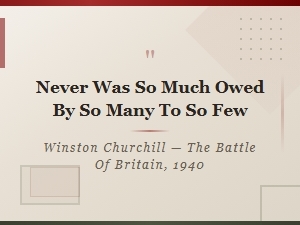 Famous Battle Quotes and Descriptions From the World Wars
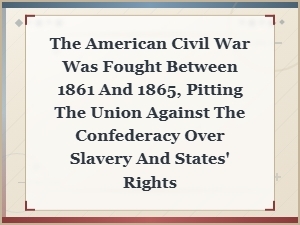 Descriptive Sentences About the American Civil War for Students
 Famous War Descriptions That Inspire Powerful Creative Writing
 Writing Vivid War Scenes in Historical Fiction: Techniques From Famous Battle Descriptions
 Age of Exploration Historical Event Sentence Rephrasing Exercises
 Historical Event Sentences: Discovery and Exploration Variations